Multi-Temporal 3D-ResNet for Small Satellite System Fault Diagnosis |
| 6 March 2026, Friday, 2:00pm to 2:30pm | Speaker: Dr. Goh Shu Ting, Lecturer, Department of Electrical and Computer Engineering, NUS |
| Venue: Seminar Room 8D-1, Level 8, Temasek Laboratories | Event Organiser Host: Dr. Tay Wee Beng |
ABSTRACT |
Reliable onboard fault detection and diagnosis (FDD) is essential for autonomous small-satellite constellation operations. The satellite telemetry streams are typically high-dimensional, strongly time-correlated, and severely imbalanced. This results the rare but critical faults are hard recognized. To address such issues, we proposed an imbalance-aware spatiotemporal diagnostic framework based on three-dimensional convolutional neural networks (3D-CNNs). The time-series multi-dimensional satellite telemetry data is converted into structured spatiotemporal volumes via sliding-window segmentation and grid-based embedding. Then, a lightweight residual 3D-CNN is developed to enable end-to-end multi-class classification. In addition, a class-balanced focal objective function is presented to mitigate class-imbalance issues while enhancing the sensitivity of minority fault modes. The Lumelite-series satellite's telemetry dataset with 23 fault types is constructed for training and evaluation purposes. The proposed lightweight residual 3D-CNN is benchmarked with long short-term memory (LSTM)--random forest, state vector machine, 2D-CNN, CNN-LSTM and residual neural network algorithms. The experimental results show that the proposed algorithm has the highest overall accuracy and Macro-F1 performance, with notably higher recall on low-frequency faults. The results indicate that the proposed algorithm has a strong potential for real-time onboard health monitoring in resource-constrained small satellites. |
| ABOUT THE SPEAKER |
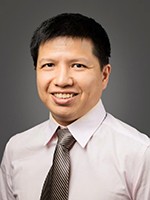 Dr. Goh Shu Ting received his PhD degree at the Mechanical Engineering–Engineering Mechanics Department, Michigan Technological University in 2012. He is currently a Lecturer in Department of Electrical and Computer Engineering, National University of Singapore (NUS). He previously was a Research Fellow in the Satellite Technology and Research (STAR) Centre. He was involved in Lumelite satellite program in STAR Centre. He was also involved in VELOX CubeSat programs in Nanyang Technological University during 2013 to 2017. He is currently a member of AIAA Small Satellite Technical Committee. His research interests include the formation flying navigation and control, attitude determination, machine learning-based in-orbit application, and space-based solar power system design.
|

AI for PDEs and Neural Operators for Parameterized Problems in CFD |
| 6 March 2026, Friday, 2:30pm to 3:00pm | Speaker: Mr. Zhuo Zhang, PhD Student, National University of Defense Technology / NUS |
| Venue: Seminar Room 8D-1, Level 8, Temasek Laboratories | Event Organiser Host: Dr. Tay Wee Beng |
ABSTRACT |
Solving partial differential equations (PDEs) that govern complex fluid dynamics is central to modern scientific computing. However, traditional numerical methods can be prohibitively expensive when repeated evaluations across varying parameters or geometries are required. In this talk, we discuss key challenges in PDE solving, including computational complexity, training efficiency, and solution accuracy. We then introduce neural operator frameworks to address large-scale parameterized problems in computational fluid dynamics (CFD). Experimental results demonstrate that our approach achieves significant improvements in both solution accuracy and computational efficiency compared to baseline methods. |
| ABOUT THE SPEAKER |
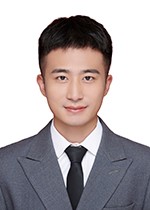 Mr. Zhuo Zhang is a PhD Student at National University of Defense Technology. He is currently conducting research on data-driven flapping wing flow field simulation under the supervision of Prof. Khoo Boo Cheong and Dr. Tay Wee Beng. His research focuses on AI4S. He has published more than 10 papers in journals and conferences. He was recently honoured by the China Association for Science and Technology (CAST) Youth Science and Technology Talent Cultivation Programme for Doctoral Students. Mr. Zhuo Zhang is a PhD Student at National University of Defense Technology. He is currently conducting research on data-driven flapping wing flow field simulation under the supervision of Prof. Khoo Boo Cheong and Dr. Tay Wee Beng. His research focuses on AI4S. He has published more than 10 papers in journals and conferences. He was recently honoured by the China Association for Science and Technology (CAST) Youth Science and Technology Talent Cultivation Programme for Doctoral Students.
|